Software · Post Line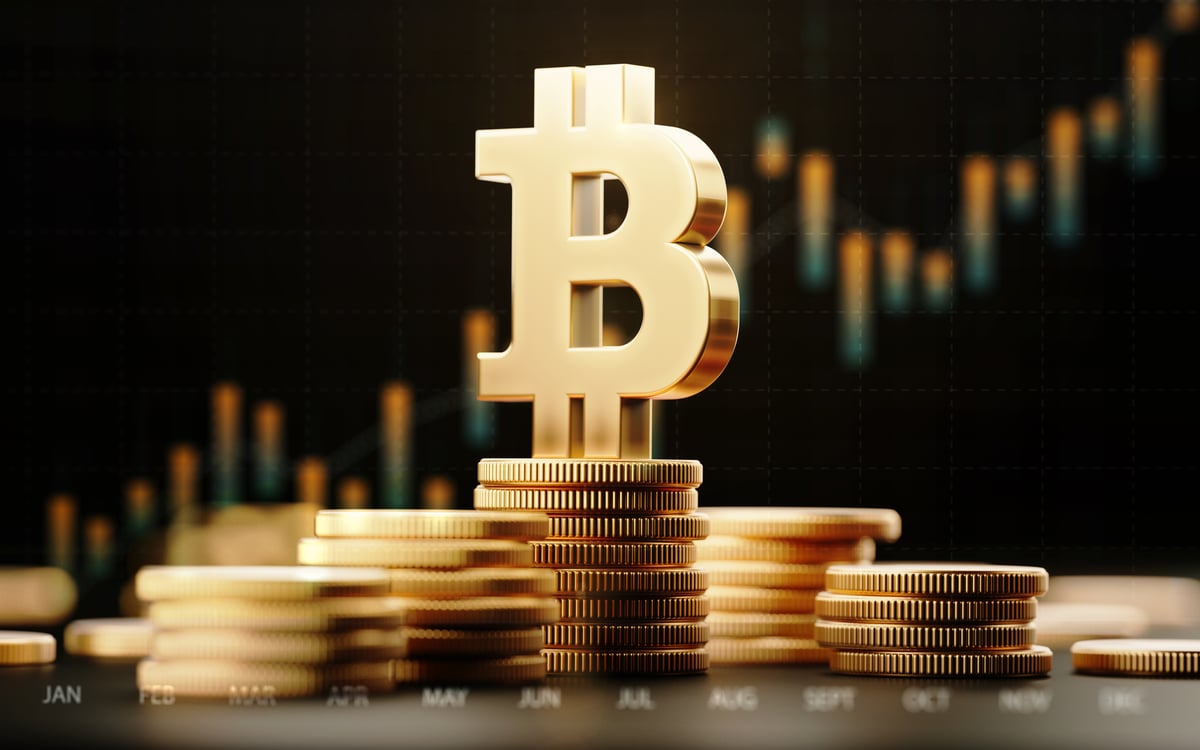
U.S. spot Bitcoin ( BTC +0.42% ) exchange-traded funds (ETFs) received about $2.6 billion in capital inflows over the three-week period ending on Oct. 2. To most Bitcoin holders, that's good news, as it builds on the trend of Bitcoin ETFs seeing regular flowing in instead of flowing out, even though the coin remains about 32% below its October 2025 peak. However, there's more to the story.
Here's the fuller context for what's driving Bitcoin and its ETFs upward as I write this in October 2026. Image source: Getty Images. Hedge funds are doing a trade that's helping the ETFs Hedge funds and institutional investors have a few different purposes for Bitcoin ETF shares than most individual investors do.
And there's at least one piece of evidence suggesting that hedge funds are responsible for at least some of the inflows into Bitcoin ETFs. In what's called a basis trade: A hedge fund purchases Bitcoin ETF shares and simultaneously sells Bitcoin futures contracts for later delivery at higher prices, enabling it to capture the gap between the two as prices converge. Such trades can be performed profitably whether Bitcoin itself rises or falls, and CoinShares' James Butterfill told Cointelegraph in September that "at the moment the basis trade has an attractive yield at 6%..." For a player with a lot of capital, that could be a very meaningful gain.
Today's Change ( 0.42 %) $ 344.07 Current Price $ 82,992.00 The catch is that the capital used in the basis trade tends to leave for greener pastures when the spread between the ETF price and the futures contract price shrinks to be too small to be worth executing the trade. In Q1 of 2026, hedge funds cut their ETF holdings by 39%, per an analysis of regulatory filings performed by CoinShares. Professional investors owned just 20.8% of U.S. spot Bitcoin ETF assets in Q1 2026, and financial advisors, who tend to make long-term allocations, held 58% of that share.
Who is actually buying Bitcoin right now? Per the on-chain data, large private wallets are among Bitcoin's buyers at the moment. Wallets holding between 100 and 1,000 BTC added 113,950 BTC from mid-July to late September 2026, per data from Santiment.
Similar to the basis trade, another likely motive for the ongoing purchasing is what's called the debasement trade. The debasement trade is a bet that heavy U.S. government borrowing and/or money printing will erode the dollar's value, thereby driving investors to buy inflation-resistant assets , including Bitcoin, which might eventually prove to be one. Many investors date the debasement trade's revival to mid-August 2026, when the Treasury Department announced that it would double its buybacks of long-dated sovereign debt, and then later tripled them.
Bitcoin went on to climb by about 35% from that point in mid-August to early October. So Bitcoin's ETF inflows are being driven in large part by deep-pocketed investors with a lot of capital that they want to monetize and protect. If that group becomes more fearful, expect the inflows to accelerate.
Source: The Motley Fool