Software · Post Line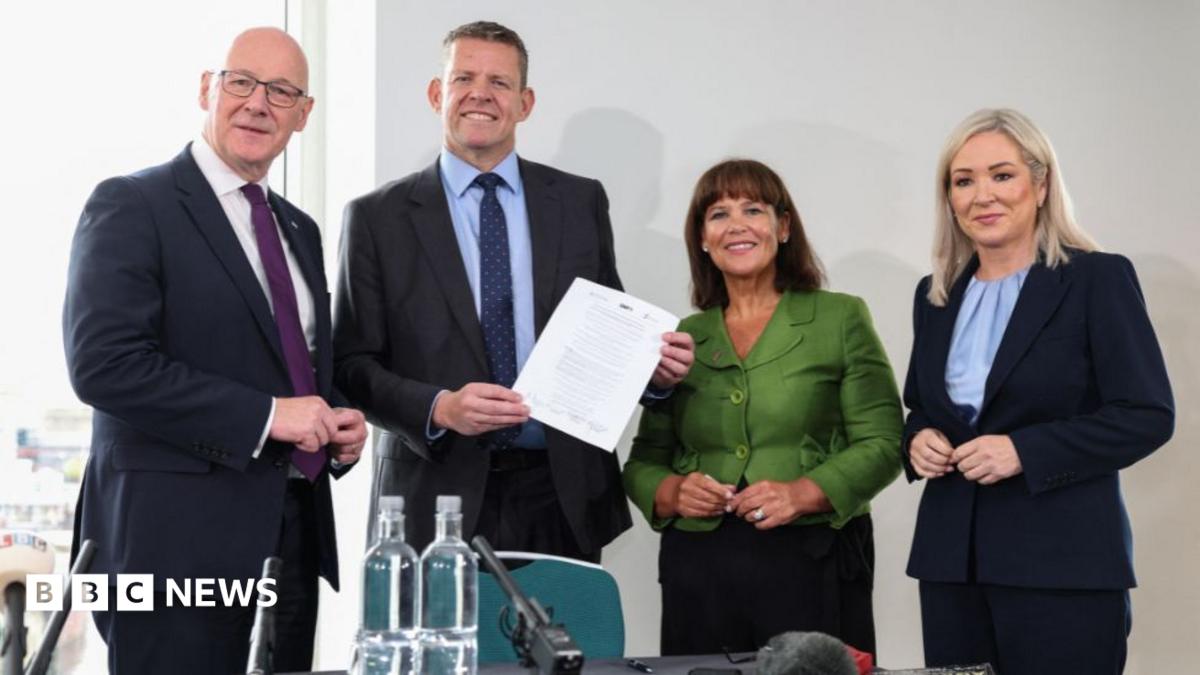
Image source, Getty Images Image caption, John Swinney has signed an agreement with Rhun ap Iorwerth, Mary Lou McDonald and Michelle O'Neill By Angus Cochrane Senior political journalist, BBC Scotland First Minister John Swinney says he wants to hold a second Scottish independence referendum by 2031. The SNP leader also predicted that Andy Burnham would be the last prime minister of the UK following talks with nationalist leaders in Cardiff. Swinney, Plaid Cymru leader Rhun ap Iorwerth, Sinn Féin president Mary Lou McDonald and Sinn Feinn vice-president Michelle O'Neill have signed a joint declaration stating that "Westminster's time is coming to an end".
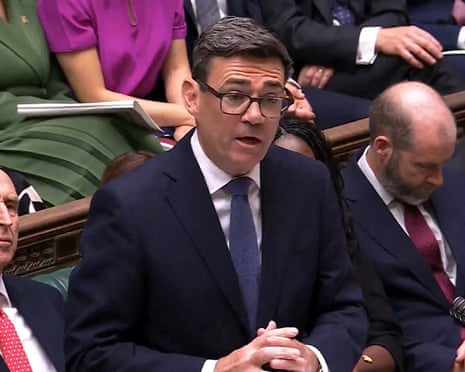
Burnham said last week that a second referendum remains "off limits". The prime minister clarified his position after earlier telling MPs that both in Scotland and Northern Ireland a border poll would be considered if there was a clear consensus and public opinion had changed. In a letter to Swinney the following day, however, he insisted a Scottish referendum was not on the table while he focuses on growing the economy and bringing down the cost of living.
Following elections in Scotland and Wales in May, the governments of Scotland, Wales and Northern Ireland are all represented by nationalist first ministers, although O'Neill represents one half of Stormont's power-sharing administration. In the joint statement, ap Iorwerth, Swinney, O'Neill and McDonald said that "there could be no clearer sign that Westminster's time is coming to an end". Meeting in their capacities as party leaders, they stated: "Each of our nations has the right to determine its own future, through democratic means and in accordance with the wishes of its people." At a news conference, Swinney said he wanted to ensure Scots "have a choice on their constitutional future" in this Holyrood term, which is due to end in 2031.
He predicted that Burnham would be the last UK prime minister, adding: "The people of Scotland, if given the choice of independence in a referendum, will take that choice, because all of the information that we see in front of us about the trends in opinion polling indicate that's the preference of the people of Scotland." Constitutional change 'very much on the table' Swinney claimed the "moment has now come" for a second referendum. He noted that the Scottish Parliament has the largest number of pro-independence MSPs in its history - despite the SNP losing seats in May . Together with the Scottish Greens there are a now total of 73 pro-independence MSPs, an increase of one, although their share of the vote fell to about 41%.
The first minister also cited the "mood of the Scottish people" as expressed in May and support for independence in opinion polls which in recent months have suggested a small majority in favour. Swinney said the party leaders had agreed that there must be "no obstacles to the people of our countries expressing their right to self-determination". "We will each individually be responsible for our own journeys but we are absolutely united by that principle of self-determination," Swinney told the conference.
Ap Iorwerth, the Welsh first minister, called for a fundamental redesign of UK constitutional framework, envisioning independent nations working together. He added that the "current status quo is not tenable". O'Neill, the Northern Irish first minister, said the party leaders agreed that "Westminster does not and will never serve our people well".
She insisted constitutional change was "very much on the table" despite Burnham's recent comments. Scotland voted in 2014 to remain part of the UK by a margin of 55% to 45%. Pressure from the SNP for a second vote ramped up following the 2016 Brexit referendum, with Nicola Sturgeon arguing there had been a material change in circumstances.
However, successive prime ministers have refused to countenance another poll. And in 2022, the Supreme Court ruled that the Scottish Parliament could not hold another referendum without the consent of Westminster. At Prime Minister's Questions last week, Burnham said there would not be a second referendum until there is "majority public support".
He reiterated the following day in a letter to Swinney that a referendum was "off limits". The Labour leader said that the 2014 referendum was based on a shared agreement between the Scottish and UK governments that it was right to hold one, but that there was now no similar consensus. He also highlighted Labour's manifesto commitment opposing independence and another referendum.
Burnham added: "Independence and a referendum are off limits as it would take our focus away from growing the economy and helping families with the cost of living." During the election campaign, Swinney said that a referendum could be held as soon as 2028 . However, questions remain about the mechanism through which that could be achieved.
Source: BBC